BEL
STATUS
○ Competition
LOCATION
Bellinzona, CH
YEAR
2025
CLIENT
Consiglio di Stato della Repubblica e del Cantone Ticino
ACQUISITION MODES
Project competition according to one-stage open procedure
IMAGES
OTHER SPECIALISTS
Matteo Venezian Architetto
Francesco Sala Architetto
Mario Monotti - Monotti Ingegneri Consulenti SA
Erisel SA
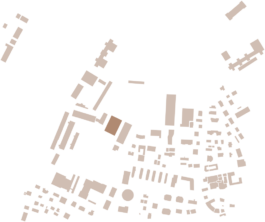
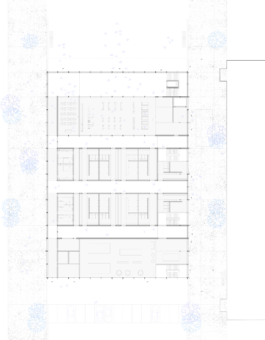
The project aims to transform the area into an important urban connection point, linking the neighborhood with the school complex, the Espocentro, and the city park. Without increasing the building volume, the design strengthens existing spatial relationships and makes the side streets new pedestrian routes. The outdoor area becomes a flexible public space for sports, events, and temporary activities.
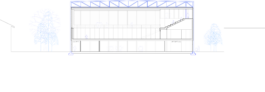
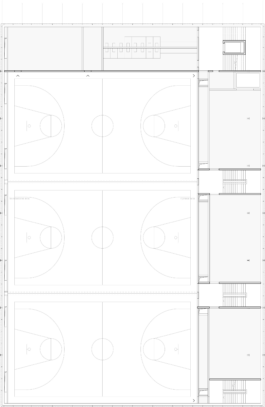
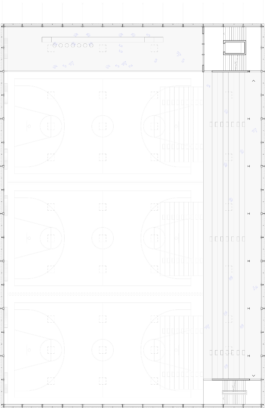
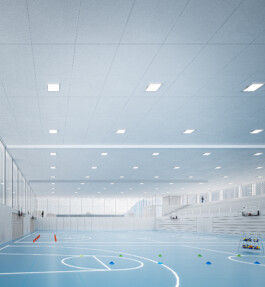
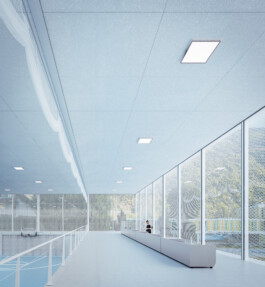
The building is organized on three levels with a clear separation of flows to ensure safety and efficiency. The ground floor hosts changing rooms, support spaces, storage, and technical rooms. On the first floor, the triple gym is designed with separate access for athletes and the public. The second floor includes the stands, a small café, and multifunctional rooms.
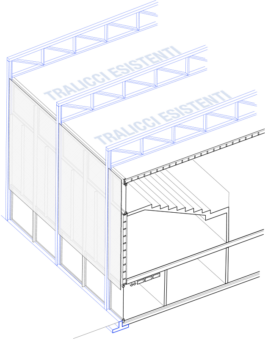
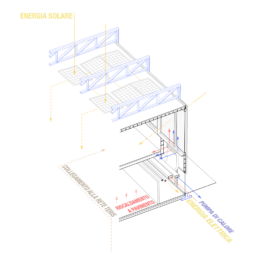
The project chooses to reuse the existing structure for reasons of sustainability and resource efficiency. The metal frame is kept and transformed into an external exoskeleton, becoming a strong architectural feature. New internal structures and high-performance façades improve energy efficiency. The combination of steel, prefabricated timber elements, and concrete ensures durability, faster construction, and a clear architectural identity.


BEL
STATUS
○ Competition
LOCATION
Bellinzona, CH
YEAR
2025
CLIENT
Consiglio di Stato della Repubblica e del Cantone Ticino
ACQUISITION MODES
Project competition according to one-stage open procedure
IMAGES
OTHER SPECIALISTS
Matteo Venezian Architetto
Francesco Sala Architetto
Mario Monotti - Monotti Ingegneri Consulenti SA
Erisel SA

The project aims to transform the area into an important urban connection point, linking the neighborhood with the school complex, the Espocentro, and the city park. Without increasing the building volume, the design strengthens existing spatial relationships and makes the side streets new pedestrian routes. The outdoor area becomes a flexible public space for sports, events, and temporary activities.
The building is organized on three levels with a clear separation of flows to ensure safety and efficiency. The ground floor hosts changing rooms, support spaces, storage, and technical rooms. On the first floor, the triple gym is designed with separate access for athletes and the public. The second floor includes the stands, a small café, and multifunctional rooms.
The project chooses to reuse the existing structure for reasons of sustainability and resource efficiency. The metal frame is kept and transformed into an external exoskeleton, becoming a strong architectural feature. New internal structures and high-performance façades improve energy efficiency. The combination of steel, prefabricated timber elements, and concrete ensures durability, faster construction, and a clear architectural identity.